
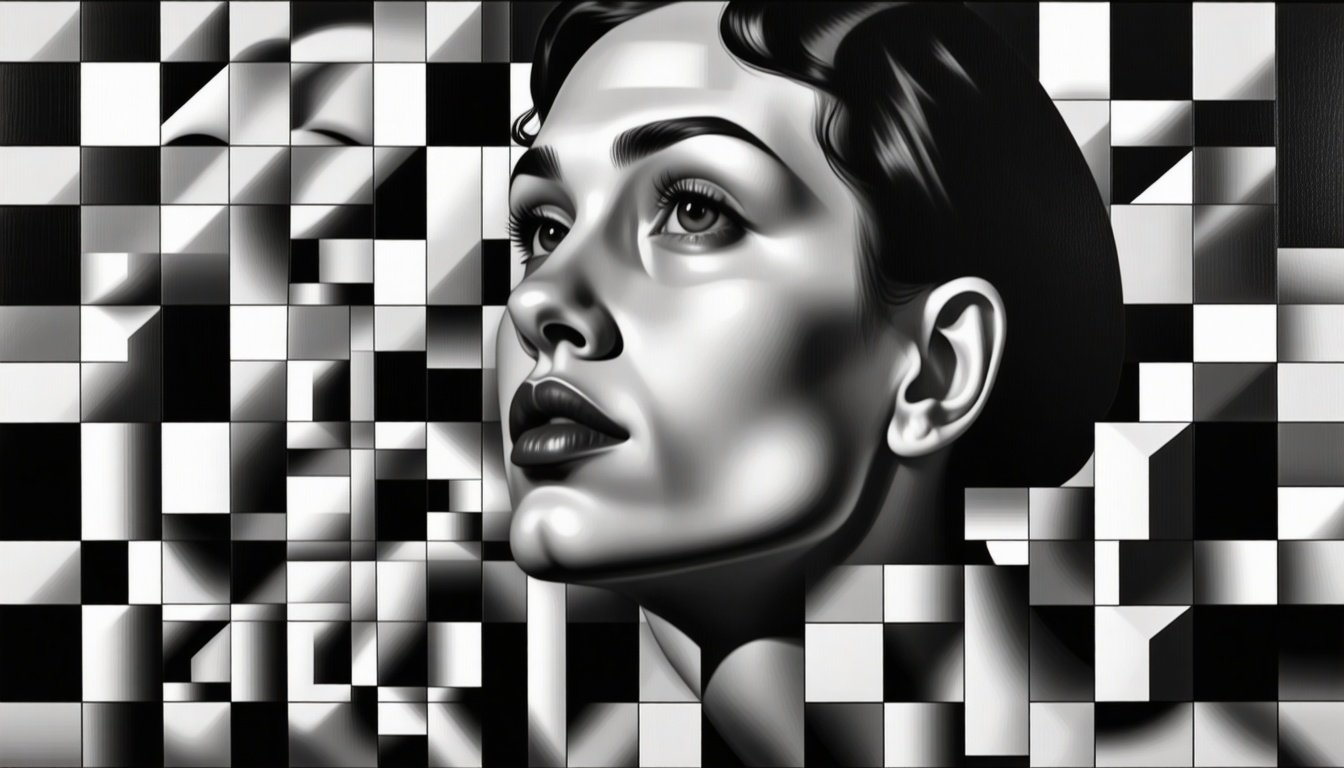
Have you ever looked at an ordinary object—a mug, a chair, even your own hand—and suddenly seen it as if you were looking through a funhouse mirror? Like, not because the mirror is weird, but because your brain just flipped some invisible switch? That happened to me when I got tangled up with Cubism. Suddenly, everyday things did not feel so everyday anymore. It was like waking up with a new pair of glasses, but these glasses showed me more than just the outside of things. They showed me the inside, the edges, the angles, and all the bits I never even noticed.
If you are someone who likes to stare at the world and wish it could be a little more interesting, or a little more mysterious, Cubism might just change how you see things too.
What the Heck Is Cubism Anyway?
Okay, before I get carried away calling Cubism some magic trick, let us clear up what it is. Cubism is an art style that popped up in the early 1900s. It was started by two clever artists named Pablo Picasso and Georges Braque. They wanted to do something different. Instead of painting things exactly like they looked — round and smooth or long and skinny — they broke everything down into shapes. Lots of little squares, rectangles, and triangles pieced together.
But here is the kicker: they were not just drawing something from one side, like you look at a chair and paint the chair. They showed many sides at once. Imagine taking a chair and unfolding it so you can see the front, side, and back all mashed together in one picture. Weird, right? But it looked amazing.
Why Did This Blow My Mind?
Before Cubism, I used to look at stuff and see only one version — my usual point of view. The front of my favorite mug was just that: the front. And the handle? Well, the handle was just a handle. Done. Simple. But Cubism invited me to dump that boring habit, to see the mug not as one flat thing but as a jigsaw puzzle of many pieces that told a bigger story.
Suddenly, I was not just seeing the mug. I was seeing the mug, its handle, the shadows it made, the colors on it, and a hint of what it felt like to hold it—all at once. This strange way of looking helped me shake off lazy habits of seeing everything as just “normal.”
How Cubism Made Me Look Differently at the Everyday
Imagine waking up tomorrow and looking at your breakfast plate, but not just from above—also from the sides, the inside, and maybe the back. You might see the pancake’s edges like puzzle pieces, the fork’s tines as little rectangles, the orange juice as a splash of light and oval shapes instead of just “juice.” It sounds crazy until you try it.
- Breaking things into pieces: Cubism taught me to notice the parts of objects, not just the whole. Instead of a chair, I saw legs, seat, and backrest separately.
- Seeing multiple views: What makes an apple, an apple? Is it roundness, color, or something else? Cubism asked me to imagine holding the apple and turning it in every direction all at once.
- Shapes everywhere: Straight lines, curves, angles—suddenly these little basic building blocks jumped out of things I never thought about before.
- Playing with colors and shadows: Colors became a way to understand surfaces and volume, not just paint a pretty picture.
I started looking at my messy desk differently. The books were no longer just books, but a mix of rectangular shapes and lines. The lamp light wasn’t just light; it was an explosion of shadows and triangles. Even the clutter became a sort of sculpture.
Why Does This Matter?
You might be wondering, “Cool story, but why should I care how Cubism changes the way you see your stuff?” Well, there is something powerful about slowing down and really staring at what is around us. We usually rush through daily life like we have a checklist: wake up, eat, work, sleep, repeat. Objects just fill the background.
But Cubism dared me to make those objects the headline for a moment. It was like saying, “Wait. There is a secret world here. Just look closer.” It flipped my tired eyes awake and gave me a chance to find little surprises hiding in plain sight.
What Makes Cubism Different from Just Fancy Drawing?
Drawing is fun, but Cubism is a little rebel art. It breaks the rules on purpose. When I first tried to copy a Cubist approach, I struggled. My brain screamed, “Nope! The apple has to be round!” But the magic is in ignoring that scream. It is about playing with reality and mixing it up.
This style is not about making things look “nice.” It is about making things look honest—honest in a new way that feels raw and real. It showed me that the way we see is not fixed. It can be bent, mashed, and remixed like a song.
How I Tried Cubism (And Lived to Tell the Tale)
One rainy weekend, I pulled out a pencil and a sketchbook, grabbed my favorite cup, and gave it a go. Instead of drawing it from one side, I tried to sketch the handle and the rim and the shadow under it all muddled up in one picture. The first few attempts looked messy, like a toddler with crayons, but then something clicked.
I stopped worrying about “getting it right.” It was more like telling a story. The handle was a triangle, the curve of the cup a half-circle, and the shadow a sneaky line that added drama. I did not recreate the cup; I created my feeling about it. That was a little thrilling.
Cubism and the Joy of Seeing Differently
There is a lesson here beyond art. Cubism whispers this secret: There is no one way to see or understand anything. Whether it is a chair, a face, or a problem at work, looking at it from many angles can bring fresh ideas and new feelings. It is like giving your mind a playground to run free.
Maybe that is why Cubism feels timeless. It was born over a hundred years ago, but its trick still works for me today. It is a powerful reminder that the world is bigger than our usual point of view.
Try This at Home
- Pick an object you see every day. It could be your phone, a scuffed shoe, or a plant.
- Look at it from the front, side, and top. Imagine folding those views together.
- Draw it like Cubism — simple shapes, overlapping views, weird angles.
- Notice how your brain tries to correct the weirdness. Let it. Then smile and make it even weirder.
- Try noticing parts of the object you never looked at before. Like the curve of a leaf or the shadow under a button.
Done? Good. You just took a little Cubist adventure.
Wrapping My Head Around Everyday Magic
Cubism taught me to find mystery in the mundane. Something I thought was just a boring coffee cup turned into a wild mix of shapes and feelings. It opened a door for me to see the world not as a flat picture but a puzzle with endless ways to look at all its parts at once.
More than anything, Cubism gave me permission to see with curiosity and wonder, and maybe, to feel a little more connected to the things around me. And if an art movement can do all that? Well, it is worth a second look.