
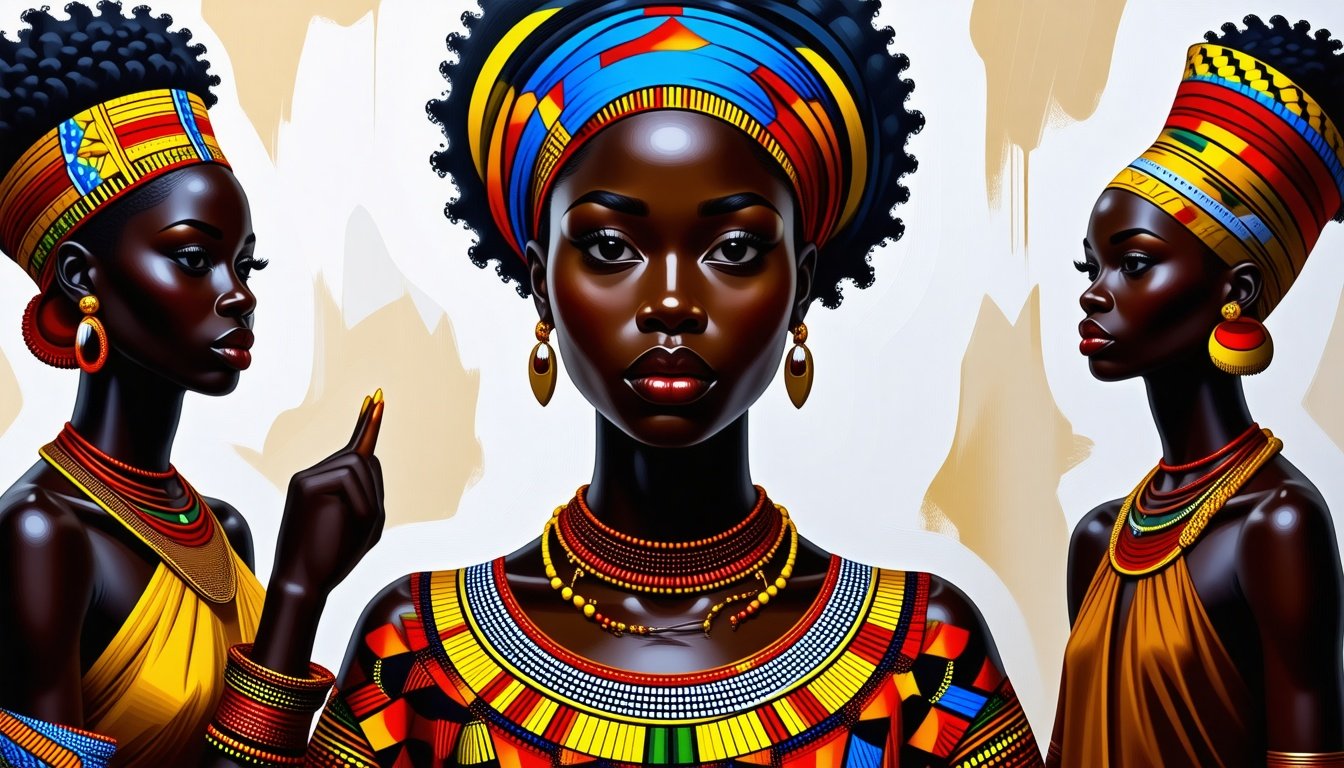
There is something magical about art that pulls at the soul, especially when that art comes from the very roots where your story began. For me, African art is not just paint on canvas or chiseled wood—it is a living, breathing connection to a world that shaped my ancestors, their dreams, their struggles, and their unbreakable spirit. Sometimes, when I look at traditional African carvings, textiles, or drawings, I do not just see objects; I see stories, faces, and rhythms that echo inside me.
Growing up, I was surrounded by so many influences. Western pop culture was everywhere—TV, music, movies—but somewhere deep down, a part of me longed for something that felt like home. Something that carried the weight of history and the joy of celebration all at once. African art traditions offered that. They are like secret doors to my identity. And the more I learned about them, the more I realized how much they shaped not just art, but life itself.
Why Art Matters to Roots
Art has always been more than decoration. In many African cultures, it was a way to tell stories before books were common. And those stories were not just any tales—they were about gods, heroes, struggles, and the everyday lives of people. When I say “art,” I mean all kinds: masks, sculptures, pottery, beadwork, textiles, and even body painting.
Each piece has meaning. It might symbolize a rite of passage, protect against evil spirits, or celebrate the harvest. Sometimes, the colors hold special messages. Red might mean power or sacrifice. Blue could represent the sky or peace. Shapes and patterns? They are like a language everyone in the community understands.
Knowing this changed how I looked at art forever. It is alive with purpose, not just pretty pictures on walls. It holds hands with history and walks alongside culture. And for me, that is how I connect with my roots—by understanding what the art says about who we are.
Ancient Traditions That Speak Volumes
The Richness of Mask-Making
Have you ever seen an African mask up close? They are like nothing else—sometimes fierce, sometimes serene, always full of character. Masks are not just for show; they are worn during ceremonies, dances, and rituals. They bring ancestors to life and invite spirits to join the gathering.
Different tribes have their own styles. For example, the Baule people of Ivory Coast make masks with delicate, serene faces. The Dogon of Mali create more abstract, geometric masks that can seem almost otherworldly. And among the Yoruba in Nigeria, masks often have rich symbolism connected to gods called Orishas.
What fascinates me is how these masks are alive with meaning. They are not just art but tools for transformation. Wearing a mask can mean stepping into another world—becoming a storyteller, a protector, or a sacred presence. Suddenly, art is not just something to look at; it is something to become.
Tapestries of Cloth and Color
Textiles are another way African art connects with life. Think of the vibrant Kente cloth from Ghana, with its bold stripes and bright colors. Each pattern tells a story, a proverb, or a moral lesson. Wearing Kente can be a celebration of identity, a way of wearing a story on your skin.
In Nigeria, the Adire cloth is made using a resist dye technique that creates patterns with indigo blue hues. It takes time and skill, and the patterns can represent family histories, social status, or spiritual beliefs. To me, these textiles feel like walking history books. You do not need words to read what they say because their colors and patterns speak volumes.
Styles That Cross Time and Space
The Bold Geometry of Ndebele Painting
If you have ever seen a wall painted with Ndebele designs, you know it jumps out at you. Bright, sharp triangles, squares, and lines that come together like a puzzle with no missing pieces. This style developed among the Ndebele people of South Africa and Zimbabwe, primarily on their homes.
What is striking is how the designs are both personal and communal. Families create patterns that show who they are, yet the overall style remains unmistakably Ndebele. It is like everyone is playing their part in a giant art symphony. The shapes feel modern and fresh, but they come from a tradition that stretches back generations.
What I love about Ndebele art is how it shows that tradition is not frozen in time. It can grow, change, and still hold fast to its roots. That lesson feels important whenever I think about how to stay connected to my heritage, even when the world around me changes.
The Expressive Power of Contemporary African Art
Of course, African art is not stuck in the past. There are so many amazing contemporary artists who blend traditional elements with new ideas. Take El Anatsui, for example, a Ghanaian artist who uses bottle caps and scrap metal to create enormous shimmering tapestries. His work talks about history, waste, beauty, and transformation all at once.
Or think about the bold paintings of Wangechi Mutu from Kenya, where she combines collage, paint, and digital elements to question identity and global culture. When I see artists like these, I feel a surge of pride. They remind me that art from our roots is still alive and speaking today.
How Connecting Through Art Changed Me
Let me be honest—connecting with my roots through African art was not always easy. Sometimes, it felt like trying to catch smoke with my hands. I did not grow up with these stories told at my kitchen table. I had to find them, learn them, and sometimes stumble over them like a kid learning to walk.
But every time I discovered a new piece of art, or learned about a style or tradition, it was like finding a little piece of myself on the floor I did not know was missing. I started collecting small masks, wearing traditional prints, and even trying my hand at beadwork. It was not about being perfect. It was about honoring the past and making it part of my present.
The more I connected, the more I felt rooted yet free. Imagine standing on solid ground, but your eyes are up in the sky, dreaming. That is what African art gave me—a bridge between where I came from and where I want to go. And it makes me wonder: how many of us are walking around with invisible strings pulling us back to places and stories waiting to be found?
Simple Ways to Start Your Own Journey
- Look closely. Visit a museum or local gallery that features African art. Take your time. Let the colors and shapes sink in.
- Ask questions. Talk to artists or experts. Sometimes a simple story behind a mask or fabric will open your eyes wide.
- Try creating. You do not have to be Michelangelo. Grab some clay, paint, or beads and play. Feel the connection grow with each touch.
- Wear your story. Find a piece of clothing or jewelry that speaks to you. Wearing it is like wrapping yourself in history and hope.
- Share what you learn. Tell friends or family about a tradition, a style, or a story. It brings those roots to life.
Why It Matters Today
In a world that sometimes feels too big and confusing, art has this incredible power to ground us. African art traditions remind me that identity is not a fixed thing locked away in a dusty book. It is alive, complicated, and beautiful. It carries joy and sorrow, strength and vulnerability.
If you come from African roots or simply want to understand a vibrant part of human creativity, diving into these art styles is like opening a door to a warm room full of stories. It is a reminder that no matter where we go or what we do, there is always a piece of us waiting to be found in the colors, shapes, and rhythms of our past.
So, what about you? What stories are waiting to be uncovered by a mask, a cloth, or a painting? Maybe, just maybe, your roots are closer than you think.