
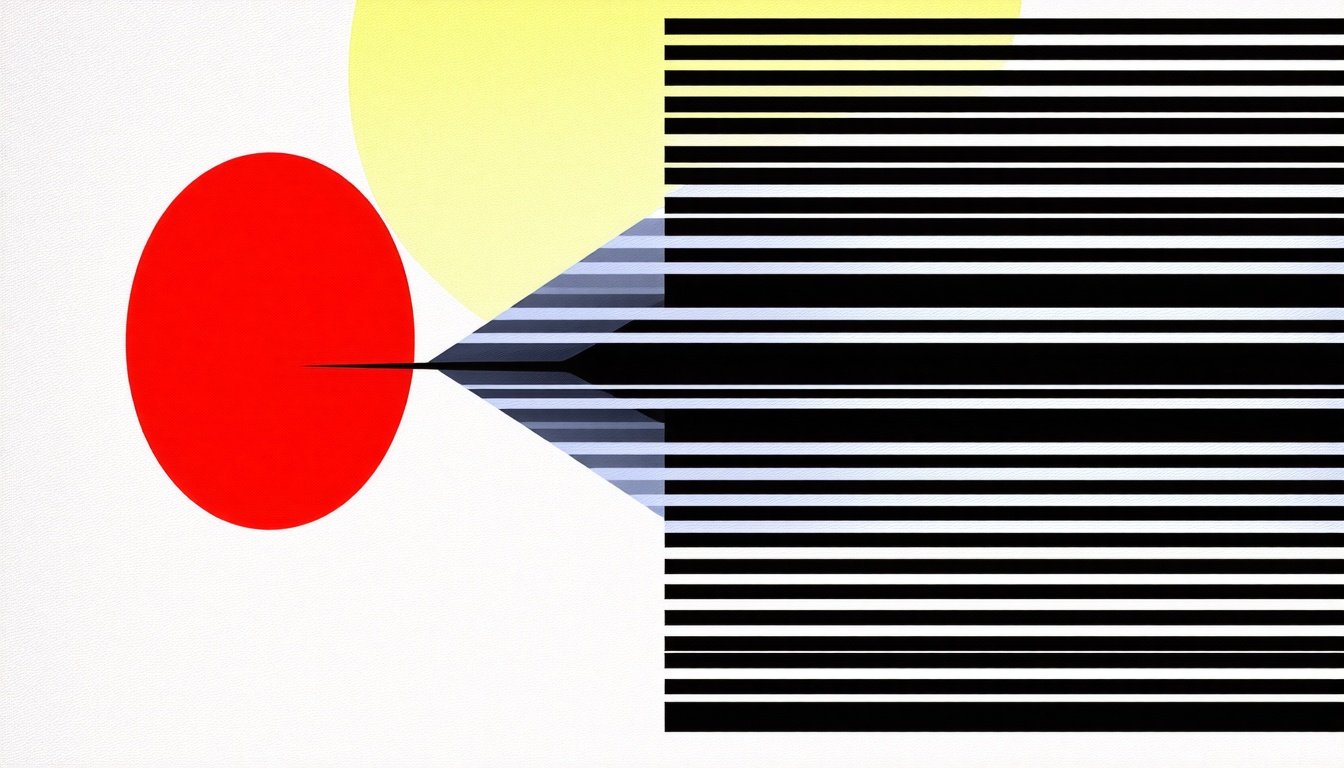
If you have ever stared at a creative project—be it a painting, a design, or even writing—and felt your brain twist into a pretzel, you are not alone. Creativity is not always the wild free ride that everyone pretends it is. Sometimes, it is messy, baffling, and downright frustrating. I used to think creativity meant drowning in options and drowning harder in a sea of colors, shapes, ideas, fonts, words. Until I stumbled upon Bauhaus principles. Suddenly, creativity got less like a raucous party and more like a calm, focused walk in the park. Let me tell you how this almost century-old art movement has quietly become my secret weapon for tackling creative projects—and maybe, it can do the same for you.
What Is Bauhaus, and Why Does It Even Matter?
If you have never heard of Bauhaus, do not worry. It is not some fancy club with a secret handshake. Bauhaus was a German school of design, art, and architecture that started in 1919. The people behind it wanted to blend art with practical stuff like furniture and buildings. They believed design should be simple, useful, and beautiful all at once. No extra fluff. Just clean, straightforward shapes and lines.
What makes Bauhaus super cool is how these ideas have traveled through time. Even today, you find Bauhaus echoes in minimalist homes, slick logos, and even websites that do not make your eyes bleed. But more than just style, Bauhaus is a mindset. It is like a warm cup of logic and creativity, stirred together until it makes perfect sense.
Why Simplicity Feels Like a Magical Spell
I always thought more was more when I worked on projects. More colors, more fonts, more ideas. The bigger the mess, the better the masterpiece, right? Wrong.
Bauhaus taught me to chop away the noise. When you strip design to its bones, you see what really matters. It feels like cleaning out your closet and discovering a bunch of awesome clothes you forgot you had.
So how does this magic work? It is about focusing on function first. What does this project need to do? What does it have to say? Everything else is just frosting. And honestly, frosting tastes better if the cake is solid.
Here is a little checklist I use to keep things simple:
- Ask what this project needs to accomplish. Forget fancy extras. What is the goal?
- Cut anything that does not serve that goal. Sounds harsh but so freeing.
- Choose simple shapes and colors. Nothing complicated unless it adds meaning.
- Use space like a friend, not enemy. Do not cram everything in.
- Trust the power of repetition. Repeating elements creates flow and unity.
Trust me, it feels spectacular to delete and destroy parts of your work only to make it better. I cannot explain the joy. It is like untying a knot you thought was impossible.
How I Bring Bauhaus into My Own Projects
Creativity is personal. What works for me might not be your exact recipe. But the Bauhaus ideas of simplicity and function have become my guiding star. Let me walk you through how I use these in three different ways:
1. Writing Articles
I write a lot. When I started, my drafts were all over the place—too many fancy words, long sentences, and random thoughts popping up like popcorn. Thanks to Bauhaus, I started asking, “What is the point here?” Penning words that do not add value? Away they go.
I think of each paragraph like a clean, geometric shape. It needs to have one idea, not five mashed together. This approach is like drawing a neat square instead of a messy splash of paint. It makes my writing easier to read and more fun to write.
2. Visual Art and Design
When I design anything—from logos to posters—the Bauhaus principles keep me calm. If a color feels too loud or a shape is just showing off, I cut it out. I ask myself: “Does this shape help tell the story? Does it work with the others?” Sometimes I even limit myself to three colors, three shapes, and two fonts. Yes, it gets restrictive, but wow, does it sharpen the whole piece.
There was this one time I designed a poster for a friend’s band. Originally, it was bursting with neon lights and wild fonts. Then I stepped back, wiped away half the elements, and stuck to the basics. The result? People told me it looked “timeless” instead of “trying too hard.” Bauhaus magic, I swear.
3. Everyday Problem Solving
Okay, this one might seem weird, but Bauhaus principles even help outside art. Say I am organizing my messy desk. Instead of stuffing papers and random gadgets in every corner, I think Bauhaus. What do I need? Pen in one spot, notebook stacked neatly, cables tucked away. Function first, clutter gone. It makes working feel easier, like my brain has more space to actually think.
Why Function and Beauty Are Secret Best Friends
Here is a little secret: Function and beauty are not enemies. They are best friends who finish each other’s sentences. Bauhaus taught me that when something works well, it naturally looks good. A chair that is comfy, sturdy, and simple does not need fancy decorations to be beautiful. It is beautiful because it serves you well.
This blew my mind when I realized it also applies to creative projects. A painting that feels honest and clear is beautiful because it speaks. A story that flows is beautiful because it connects. It is not about dressing things up. It is about showing them in their best, clearest version.
Breaking Down Bauhaus Principles You Can Use
If you want to sneak some Bauhaus into your own projects, here are the basic ideas I love to keep close:
- Form follows function. Always ask: What is this for?
- Less is more. Get rid of the extra stuff that distracts.
- Geometry rules. Straight lines, circles, squares—they bring order.
- Use primary colors carefully. Red, blue, and yellow can shout or whisper depending on the balance.
- Make everything work together. Shapes and colors should feel like friends, not strangers.
These are not rules to trap you, but tools to free you. Like having a simple recipe when your brain is overwhelmed in the kitchen.
When Simplifying Feels Like Losing Something
Cutting and trimming a creative project can feel scary. I know. Sometimes I feel like I am throwing away a part of myself when I delete a paragraph or erase a doodle. But here is the truth: Simplicity does not mean losing depth. It means showing it better.
Think about a good joke. It does not explain itself in ten minutes. It lands in a few words, sharp and clear. Bauhaus helped me find that punchline in my own work.
Why Bauhaus Sticks Around in the Heart of Creativity
Almost 100 years old, Bauhaus still feels fresh. Why? Because it talks about things that never get old: clarity, honesty, and care. It reminds us that creativity is not a wild monster called to be tamed, but a friend who wants to help, not confuse.
In a world often drowning in noise, it offers a way out, a calm place. And if this old art school from Germany can do that, then maybe it can help us, too, with all our scattered ideas and messy projects.
So next time your project feels like a puzzle with missing pieces, remember Bauhaus. Ask yourself, “What does this need to be?” Cut the rest. Trust the simplicity. You might just discover your best work hiding under the clutter all along.