
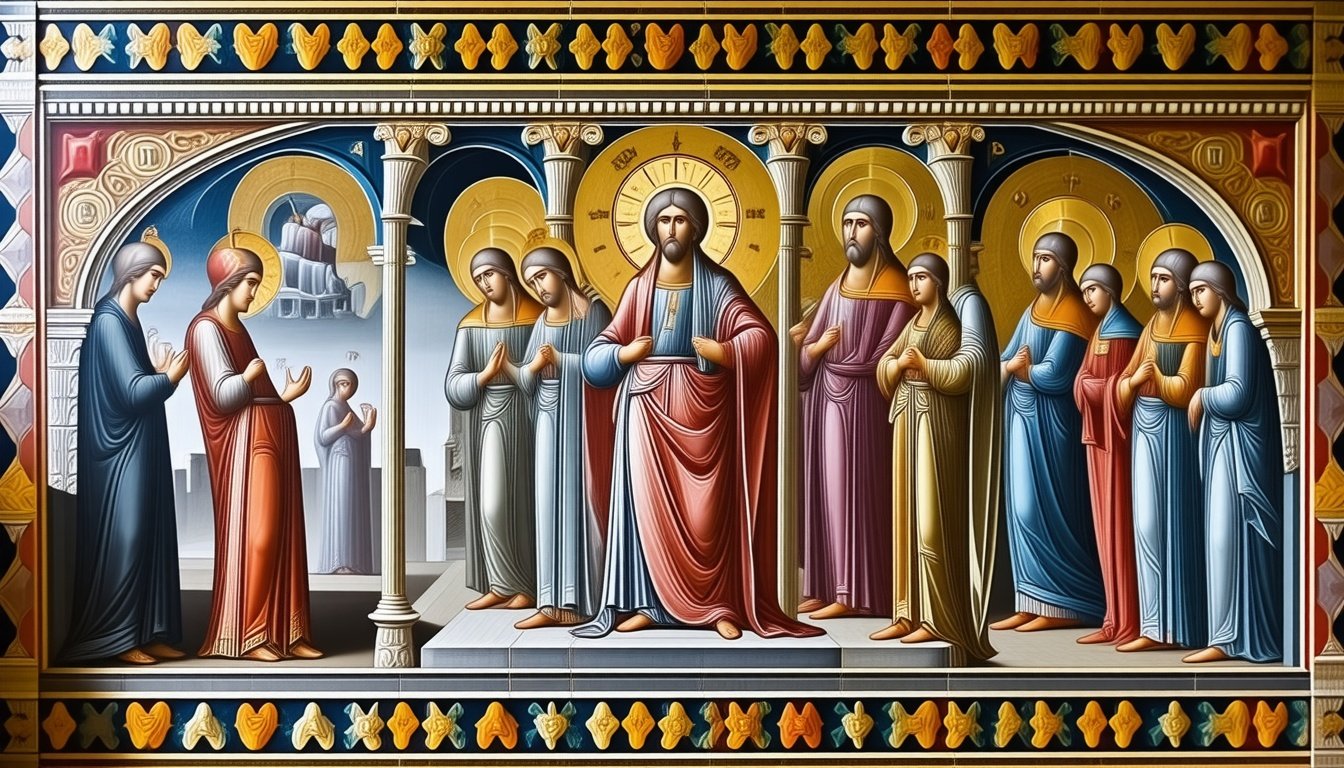
There is something quietly powerful about Byzantine art. When I first saw a mosaic of a solemn-faced saint, shimmering under golden light, I thought, “This is just old, religious stuff.” But that was before I got pulled into the intricate world behind those glimmering tiles, the layers of meaning, history, and feeling packed into every tiny piece. It is not flashy or loud like some modern art screaming for attention. Instead, it whispers and waits for you to listen closely. And when you do, it hits you unexpectedly hard.
Byzantine art is like a secret code from the past, a language of colors, shapes, and faces that stretch beyond what you see at first glance. It shaped how I look at art, and even more, it nudged me to notice the little details in life, the subtle emotions and stories that do not shout but hum softly beneath the surface.
What Exactly Is Byzantine Art?
I admit, before my accidental crash course, I thought Byzantine art was just about gold backgrounds and holy people looking serious. Turns out, there is way more to it. Byzantine art comes from the Eastern Roman Empire—yes, the one that lingered for a thousand years after the Western Empire fell. We are talking roughly 330 AD to 1453 AD. That is a long time to develop a style!
It mostly includes mosaics, icons, frescoes, and illuminated manuscripts. These artworks have a unique style that breaks some of the classic rules you might expect from Renaissance or Baroque paintings. Faces are often flat, eyes big, and bodies a little stiff. Not because the artists lacked skill, but because each choice meant something. The gold backgrounds were not just fancy; they represented heaven, the otherworldly glow of sacred spaces. The lack of perspective (that trick where things look small when far away) kept the focus on the spiritual message rather than the physical space.
Imagine looking at a painting that does not pretend you are looking through a window into a scene. Instead, you are staring directly into eternity.
Why It Felt So Different
The first time I stumbled upon a Byzantine icon, I felt almost awkward. The eyes seemed to follow me. The faces had no hint of a smile, no emotions we call “normal.” It felt like meeting a stranger who holds an ancient secret and does not want to share. Yet, every time I looked back, I caught something new—a hint of sadness in the eyes, or a slight tilt of the head that spoke of compassion.
That difference is exactly what made me curious. Why were these faces so still yet felt so powerful? Why did the colors seem to glow from inside the walls? It is because Byzantine art is all about meaning over realism. It wants to help people connect with something bigger than themselves. The art is used like a bridge, a tool for meditation, for worship, for feeling closer to the divine.
How Byzantine Art Changed the Way I See Things
I never thought a thousand-year-old style of painting would tweak how I notice everyday life. But slowly, it did. It started when I stopped rushing past art in museums, taking a moment to look at the little details—the way a hand curves, how the light plays on a face, or how colors can carry meaning without words.
Byzantine art taught me patience. Not the “sit still and wait” kind, but the kind where you pause long enough to discover something hidden, something behind the obvious. It is like reading a secret diary that only reveals itself when you stop skimming and really look.
Do you ever stare at the clouds and suddenly see shapes and stories? That is similar to what Byzantine mosaics do—they ask you to enter a quiet conversation without words. It also helped me realize that not everything needs to be loud or dramatic to be beautiful or important. Sometimes, the quietest things carry the heaviest truths.
The Power of Symbols
One of the most fascinating parts of Byzantine art is the way it uses symbols. Every color, every gesture, every background tells a story. For example:
- Gold means divine light, something holy and eternal.
- Purple is the color of royalty and power.
- Red stands for life, sacrifice, or sometimes, just the vibrant energy of human spirit.
- The halo around a figure’s head shows holiness or divine favor.
- Hand gestures can mean blessing, teaching, or prayer.
This reminded me how much we rely on symbols in our own lives. Street signs, emojis, even a wink can carry big meaning in a tiny package. It is easy to forget the power of symbols in everyday communication. Byzantine art hammered that home for me by turning every picture into a message, every image into a little sermon or prayer.
What Stuck With Me Personally
Byzantine art also nudged me in my own messy, human way. The faces in these artworks seem untouched by the chaos of normal life—they do not show anger, joy, or fear in obvious ways. Instead, they offer a calm, a stillness. That quiet presence invited me to slow down, to search for calm in my own noisy world.
When life feels like a storm, it is tempting to shout, to run, or to hide. But Byzantine art reminded me about quiet strength—how standing still can sometimes be the bravest thing. Those golden mosaics radiate not with anger or fear, but with a steady, unshakable light. It is a light that says: “You can find peace even when everything is spinning.”
And here is a secret—I started paying attention to my own “golden light moments.” It might be a quiet cup of tea, a walk outside when the sun hits just right, or a deep conversation with a friend. These moments do not feel flashy, but they glow. Just like those ancient mosaics.
Art as a Bridge to the Sacred
One thing I never expected was how Byzantine art would make me think about spirituality. Not necessarily religion, but the idea that art can connect us to something bigger. It made me wonder about the sacred in everyday things, the hidden blessings in ordinary moments.
When you stare at an icon with all its careful details, you get pulled beyond the here and now. It invites you to pause and reflect, to feel part of a long line of people who looked up at the same image and found comfort, hope, or courage.
Even if you are not religious, there is a strange comfort in that. It is a reminder that art is not just decoration or entertainment. Sometimes, it is a silent friend who holds space for your feelings, your questions, your hopes.
The Legacy of Byzantine Art Today
You might be wondering, why should Byzantine art matter in a world filled with selfies, GIFs, and endless scrolling? Because it reminds us about the power of slowing down, paying attention, and finding meaning in seemingly small things. And it reminds us that art is not just about what looks pretty but about what speaks to the soul.
Look around today. Many artists borrow from Byzantine styles—those glowing golds, the layered patterns, the symbolic gestures. Sometimes they mix it with modern twists to create something fresh and new. That mix shows how old ideas can still breathe life into new creations.
For me, Byzantine art is a reminder to look deeper, beyond the surface. To seek stories in silence and light, to find connection in the stillness. It is like having a wise old friend from the past who nudges me to pause and listen.
What I Carry Forward
- Patience to see beyond what is obvious. Not everything reveals itself at first glance.
- The value of silence and stillness. Sometimes, quiet speaks louder than noise.
- The power of symbols. Small things can carry big meanings.
- The importance of connection. Art links us across time and space to shared human feelings.
And maybe, that is the real magic of Byzantine art: how it quietly pulls at our hearts, asks us to slow down, and reminds us that beauty and meaning often live in places we do not expect.
Next time you see an icon or a mosaic, try standing a little longer. Let your eyes wander. Let your heart catch that golden light. You might discover something wonderful waiting just beneath the surface.